
Description
Winner of the 2014 ALTA National Translation Award
âPussy Riot are Vvedenskyâs disciples and his heirs. Katya, Masha, and I are in jail but I donât consider that weâve been defeatedâ¦. According to the official report, Alexander Vvedensky died on December 20, 1941. We donât know the cause, whether it was dysentery in the train after his arrest or a bullet from a guard. It was somewhere on the railway line between Voronezh and Kazan. His principle of âbad rhythmâ is our own. He wrote: âIt happens that two rhythms will come into your head, a good one and a bad one and I choose the bad one. It will be the right one.â ⦠It is believed that the OBERIU dissidents are dead, but they live on. They are persecuted but they do not die.â
â Pussy Riot [Nadezhda Tolokonnikovaâs closing statement at their trial in August 2012]
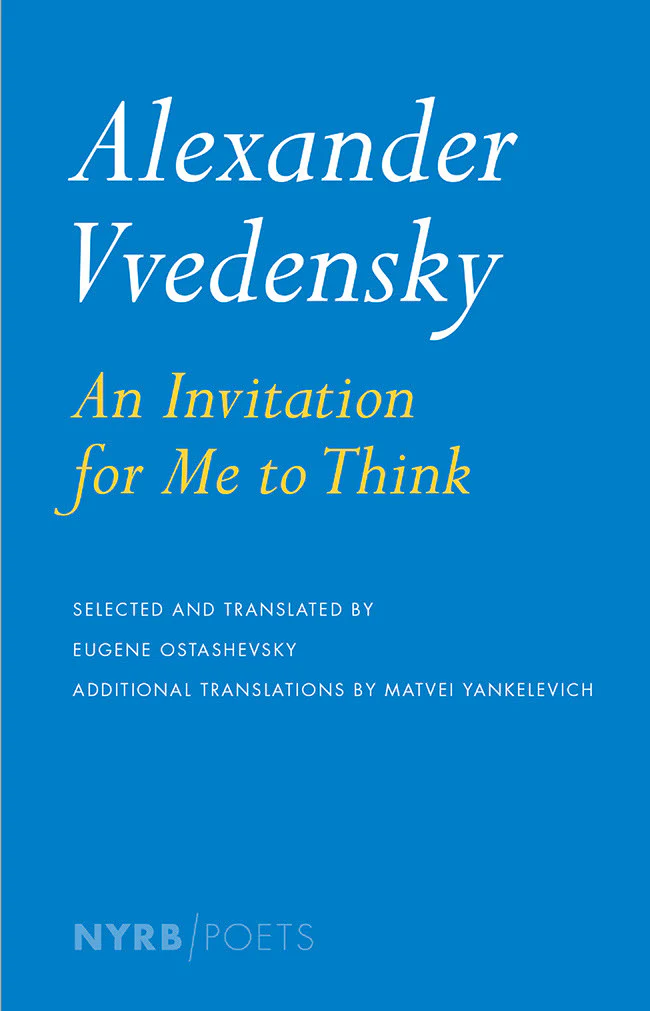
âI raise[d] my hand against concepts,â wrote Alexander Vvedensky, âI enacted a poetic critique of reason.â This weirdly and wonderfully philosophical poet was born in 1904, grew up in the midst of war and revolution, and reached his artistic maturity as Stalin was twisting the meaning of words in grotesque and lethal ways. Vvedenskyâwith Daniil Kharms the major figure in the shortâlived underground avant-garde group OBERIU (a neologism for âthe union for real artâ)âresponded with a poetry that explodes stable meaning into shimmering streams of provocation and invention. A Vvedensky poem is like a crazy party full of theater, film, magic tricks, jugglery, and feasting. Curious characters appear and disappear, euphoria keeps company with despair, outrageous assertions lead to epic shouting matches, and perhaps it all breaks off with one lonely person singing a song.
A Vvedensky poem doesnât make a statement. It is an event. Vvedenskyâs poetry was unpublishable during his lifetimeâhe made a living as a writer for children before dying under arrest in 1942âand he remains the least known of the great twentieth-century Russian poets. This is his first book to appear in English. The translations by Eugene Ostashevsky and Matvei Yankelevich, outstanding poets in their own right, are as astonishingly alert and alive as the originals.
This English-only edition does not include the poems in their original language.
Â
Â
Â
Â
Related Products
1000 in stock
1000 in stock
1000 in stock

1000 in stock
1000 in stock

1000 in stock
1000 in stock
1000 in stock

1000 in stock
1000 in stock
1000 in stock
1000 in stock